
If you are looking for a practical Facebook Messenger ads example, this guide will help you understand how Messenger ads work, why they drive stronger engagement, and which campaign types can support leads, sales, and customer conversations. Dive into the sections below to explore real use cases, key benefits, and actionable setup tips based on Meta’s messaging ad formats.
1. What are Facebook Messenger ads?
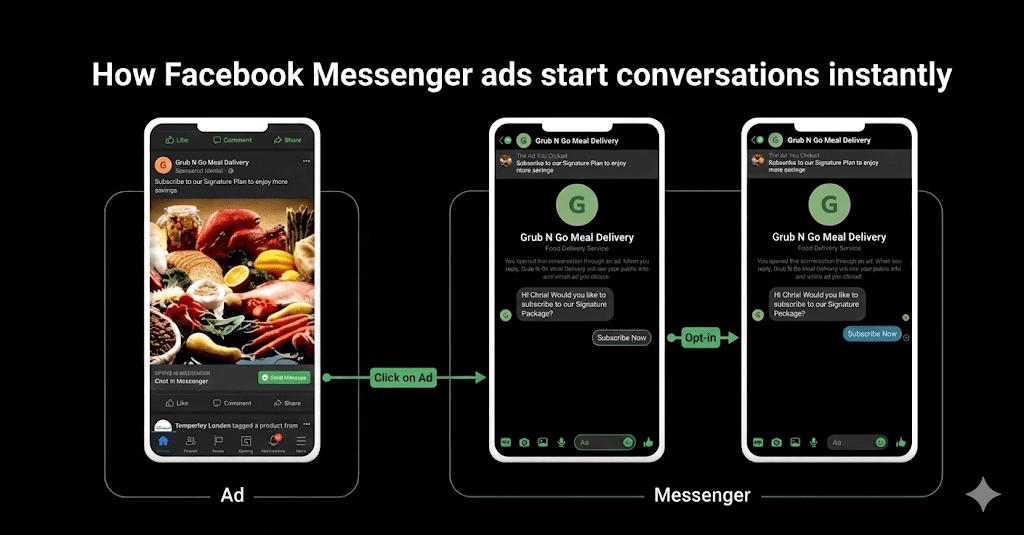
Messenger ads work much like ads on other Facebook platforms. Facebook automatically delivers your ads to the placement most likely to drive the best campaign results at the lowest possible cost. The biggest advantage is that you can use the same creative for Messenger that you are already using for Facebook and Instagram.
Compared with standard Facebook ads, Messenger ads shorten the path to action. Instead of asking users to visit a landing page, read through content, and decide later, these ads let brands answer questions right away inside the conversation. That is the core reason they are often used for lead generation, appointment booking, support, and guided purchases.
A facebook messenger ads example usually fits one of these paths:
- Click-to-message ads: appear in feeds or other placements and open a conversation
- Multi-destination messaging ads: can route users to Messenger, Instagram, or WhatsApp
- Sponsored messages: re-engage existing Messenger conversations only
2. Key benefits of Facebook Messenger ads
Facebook Messenger ads are valuable because they help brands move from passive promotion to active conversation.
2.1. Reach people faster on their preferred medium
Messenger ads shorten the distance between interest and action. Users do not have to leave the platform, load a new page, and decide whether it is worth filling out a form. They can simply tap and start asking questions. For businesses, that often means fewer drop-offs and quicker contact.
2.2. Personalize ads like LinkedIn’s Sponsored InMail
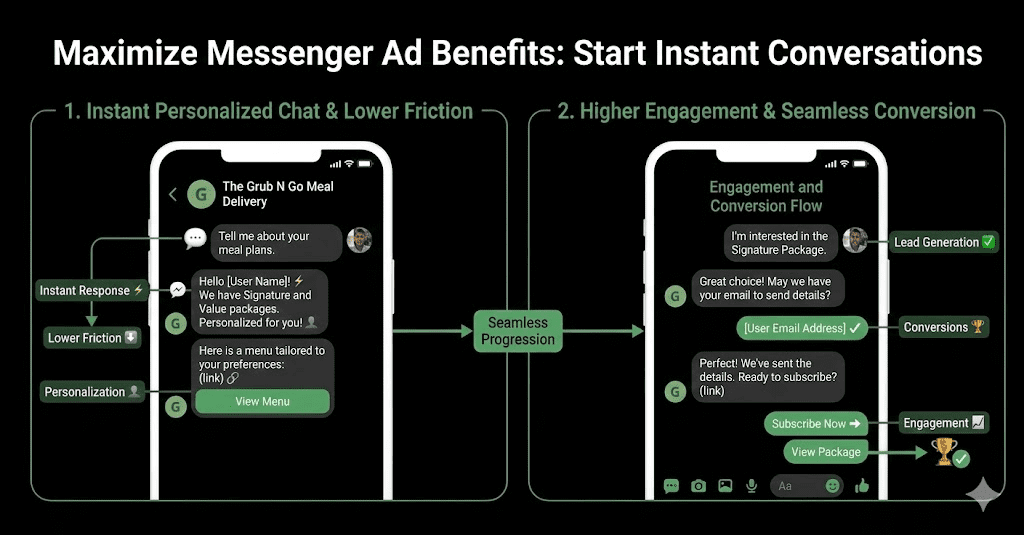
Messenger ads feel more personal than standard feed ads because the experience continues in a one-to-one conversation. Businesses can customize the first message, create different response paths, and collect customer details in a way that feels more natural than a traditional lead form. Meta’s guidance on lead generation through messaging supports using Messenger and Instagram Direct to collect lead information and customer preferences directly inside the conversation.
2.3. Messenger ads offer better local targeting options
For local businesses, Messenger ads are often a practical fit because local intent usually comes with immediate questions. A person looking for a nearby dentist, salon, restaurant, or repair service often wants to know whether there is availability, how much it costs, or how soon they can book. Chat handles that far better than a cold landing page.
2.4. Messenger ads are best for starting a conversation
Messenger ads are strongest when the business needs to talk before the user converts. They are a natural fit for consultations, bookings, quotes, service-based sales, guided purchases, and customer support. Since users increasingly value real interaction on social, brands that can respond quickly in a helpful way have a clear advantage.
3. Facebook Messenger ads examples
3.1. Top-performing click-to-Messenger ad examples
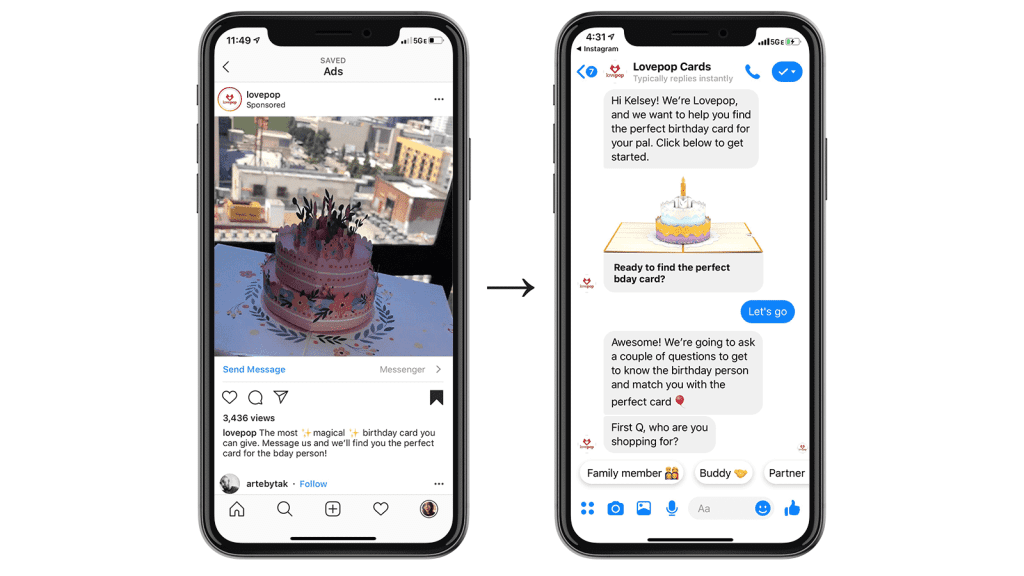
A classic Facebook Messenger ads example is a click-to-message ad with a very clear CTA like “Send Message” or “Get a quote”. The user should immediately understand why starting a chat is worth it.
A lead generation funnel via chat works well when the brand needs to qualify users before handing them to sales. The chat can ask about budget, timeline, service interest, or location. That gives the business a better lead context than a single generic form submission.
3.2. Using Messenger ads to promote special offers
Promotional Facebook Messenger ads examples work best when the offer is clear, and the chat adds value rather than repeating the ad.
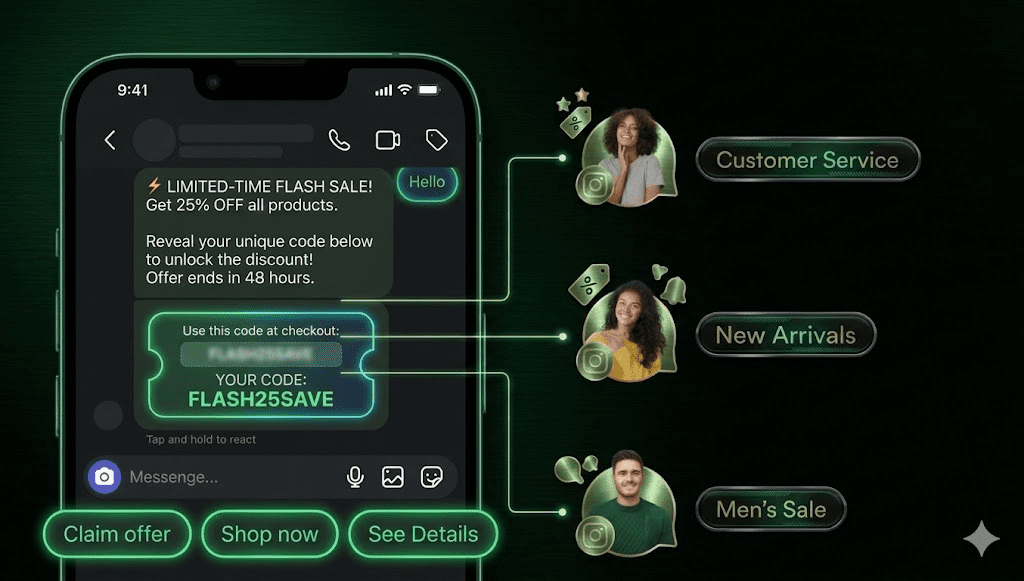
A business can use chat to deliver a coupon code, unlock a first-time buyer offer, or explain a limited-time deal. Instead of placing all the details directly in the ad, the brand can encourage the user to message for the offer. That creates a sense of urgency and exclusivity.
This approach works especially well for flash sales, short-term discounts, and promotional campaigns where timing matters. A chatbot can automatically welcome the user, share the offer, explain the terms, and direct them to the right product or service page.
3.3. Leveraging Messenger to boost event sign-ups
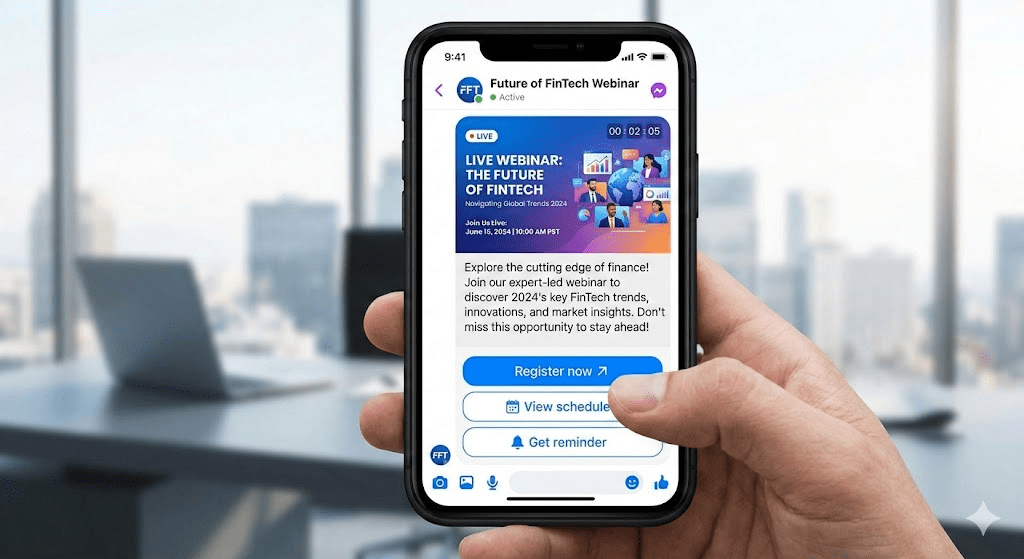
Event marketing is another natural fit for Messenger ads because registrations usually benefit from reminders, confirmations, and quick answers.
Instead of asking users to complete a long sign-up form, Messenger can collect key details in a fast sequence. This keeps the sign-up process lighter and more conversational.
A common flow might ask for:
- Name
- Email address
- Company name
- Attendance interest
- Preferred session
This makes the campaign feel more accessible and often improves completion rates.
3.4. Sending Messenger campaigns to your entire Facebook audience
Meta’s sponsored messages let businesses send offers, promotions, and updates directly to people they have already talked to on Messenger. That makes this format especially useful for product launches, restock announcements, returning-customer offers, and reminder campaigns.
Because these users already know the brand, the conversation usually feels warmer and more natural. The business is not starting from zero. It is picking up from an existing interaction.
3.5. Driving engagement while collecting valuable user insights
Messenger ads can do more than drive immediate conversions. They can also help brands learn what people want.
A chat-based survey or quiz often feels easier than a traditional form because the experience is lighter and more interactive. A beauty brand can ask about skin type. A furniture store can ask about room size and preferred style. A training provider can ask about goals and current skill level.
The conversation becomes a source of first-party insight. User preferences, budgets, timing, location, and intent can all be collected naturally through quick replies or structured questions.

3.6. Using Messenger ads for reservations and online purchases
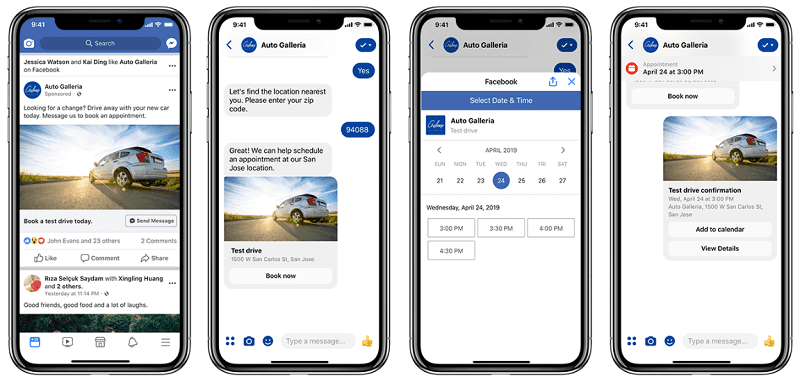
A commercial Facebook Messenger ads example often works best when the message conversation directly supports a sale or booking.
For e-commerce, Messenger can act like a guided shopping assistant. Instead of leaving the user alone on a product page, the business can recommend products, answer questions, suggest alternatives, and help move them toward checkout.
This can be particularly useful when buying decisions are not purely impulse-based. If the product has variations, pricing tiers, or feature choices, chat can reduce hesitation and speed up the path to purchase.
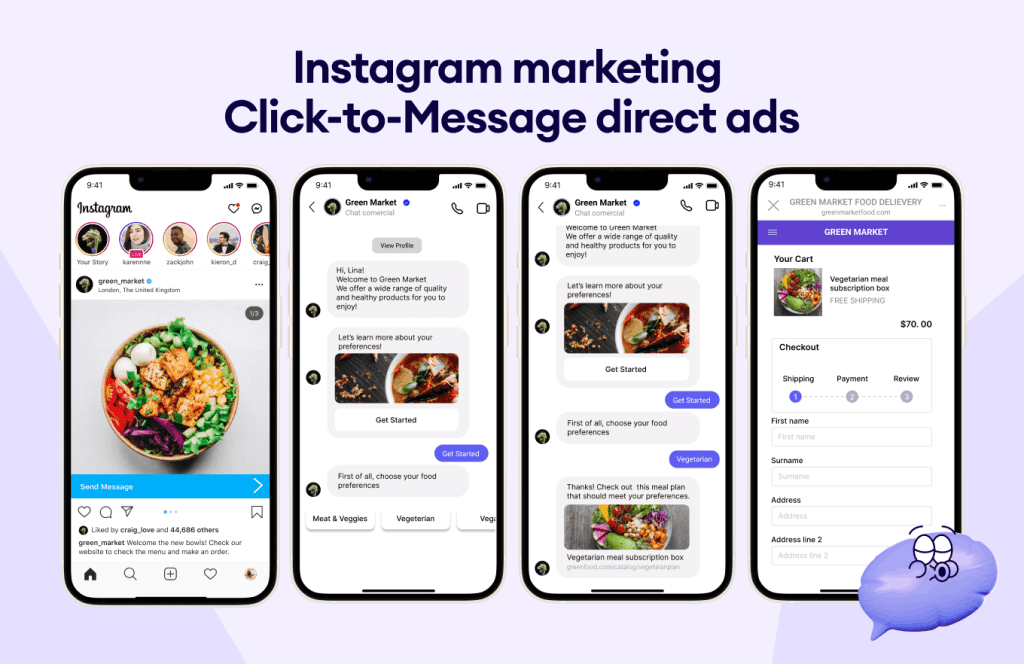
3.7. Instagram-based Messenger ads example
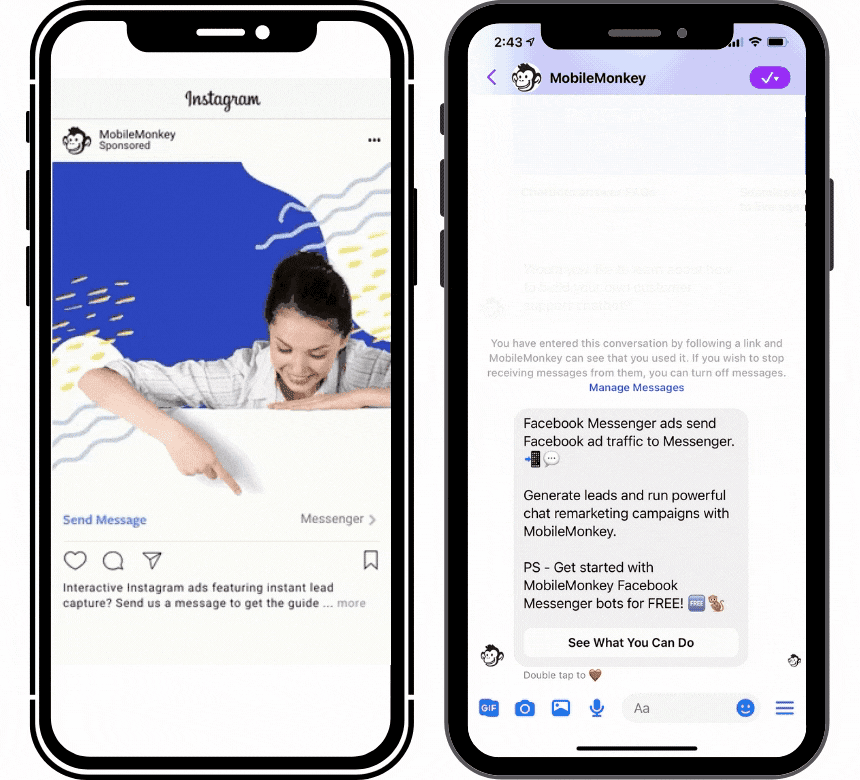
Messaging-based ad journeys are not limited to Facebook feed placements. Meta allows click-to-message campaigns to send people from ads into Messenger, Instagram Direct, or WhatsApp, depending on the setup.
That opens the door to cross-platform campaigns where a user sees a visually strong ad on Instagram but continues the conversion journey through direct messaging. This is especially useful for beauty, fashion, food, travel, and lifestyle brands where discovery often happens on Instagram first.
3.8. Messenger ads for retargeting and re-engaging users
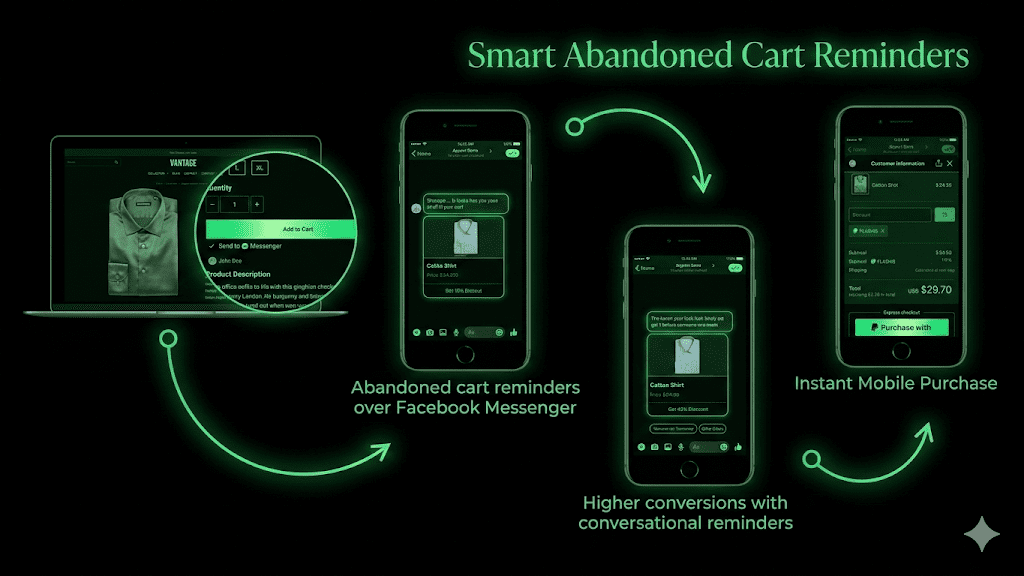
Retargeting is one of the most practical uses of Messenger ads because the audience already has some familiarity with the business.
Sponsored messages work well here because they can reconnect with people who previously chatted with the brand. Meta specifically positions sponsored messages as a way to send targeted promotions directly to people who have already talked to the business on Messenger.
This is useful for abandoned cart recovery, incomplete bookings, unanswered quotes, and reactivation campaigns. A follow-up message can remind the user what they were considering, offer support, or add urgency with a timely incentive.
3.9. Click-to-Messenger chatbot example with menu-based interactions
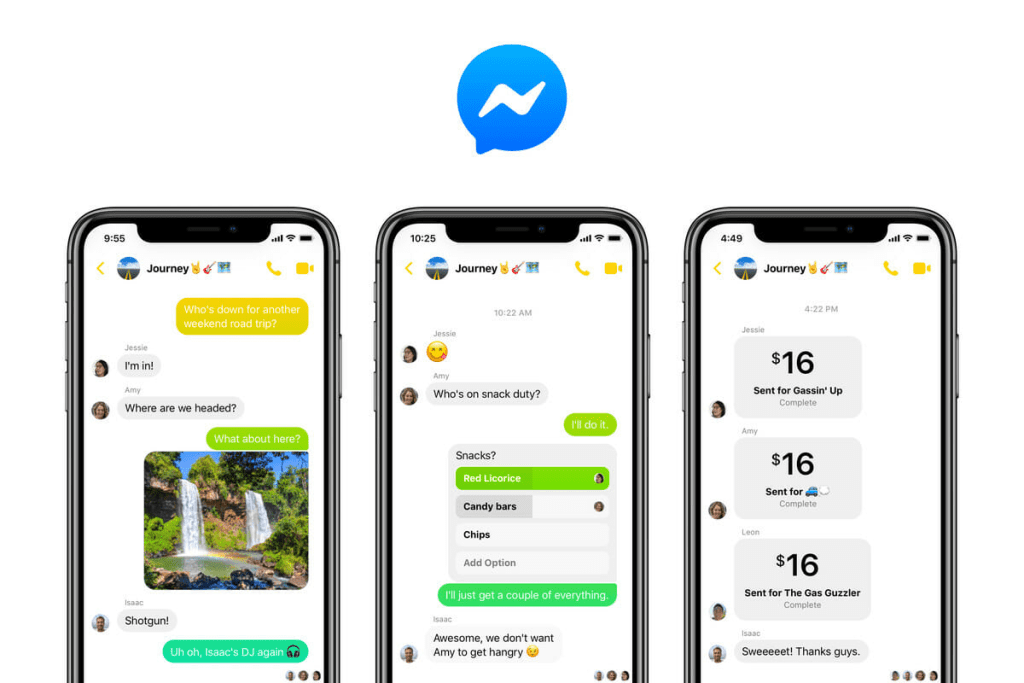
A chatbot-based Facebook Messenger ads example is ideal when the business wants to scale conversations without losing structure.
Once ad volume increases, businesses need a way to handle incoming conversations without relying entirely on manual replies. A menu-based chatbot can greet users, present options, route them to the right answer, and qualify their needs before involving a human.
This works well when the business has common conversation paths, such as pricing, appointment booking, product recommendations, order support, or lead qualification. A menu structure keeps the conversation organized and faster to navigate.
4. How to Set Up Facebook Messenger Ads
Once you understand each Facebook Messenger ads example, the next step is knowing how to launch your own. Meta’s current objective system centers on six campaign objectives: sales, leads, engagement, app promotion, traffic, and awareness. For message-based campaigns, the most relevant choices are usually leads, engagement, or sales, depending on your goal.
Here is a clear setup process.
- Click Create in Ads Manager and choose an objective that fits your goal, such as Traffic, Messages, Leads, or Sales.
- Check the campaign recommendations if they appear and apply useful suggestions. Keep in mind that some messaging metrics and features may be limited in Europe and Japan.
- At the ad set level, set your budget, schedule, audience, and placements. Meta can deliver Facebook ads in Messenger to the placements that are most cost-efficient.
- If your campaign is focused on conversions, choose Website, App, or Messaging as the conversion location.
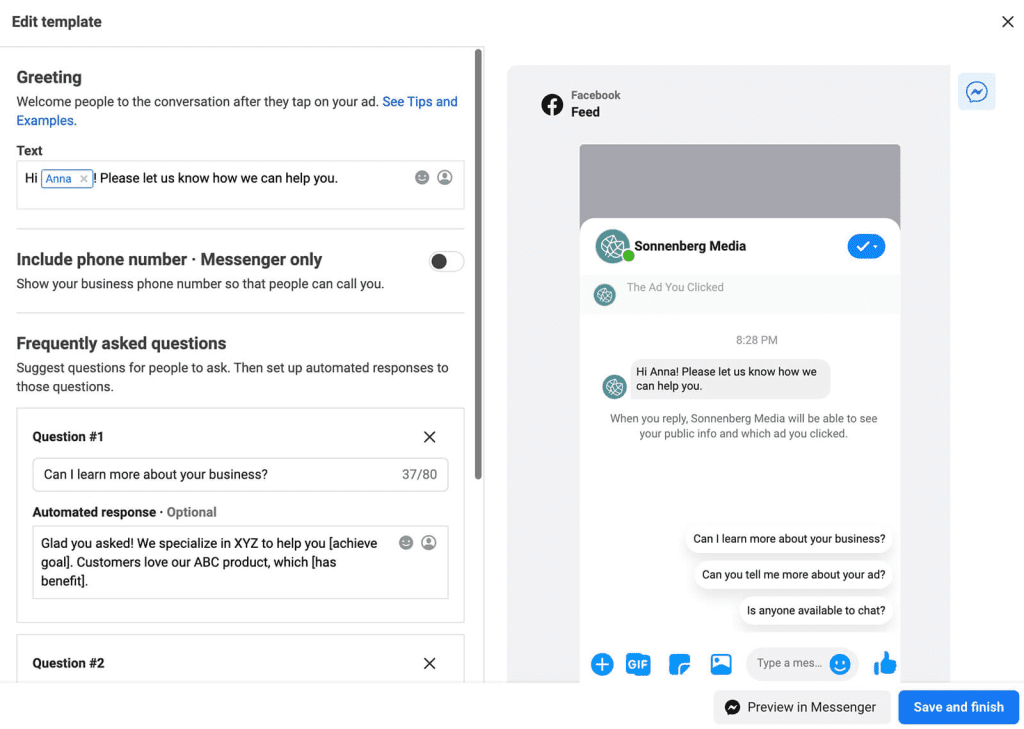
- At the ad level, select your identity, choose a format such as single image or video, then add your media, text, headline, description, and CTA.
- Submit the ad for review. Once approved, it will go live and open Messenger when users click.
5. FAQs about Facebook Messenger ads example
5.1. Can Messenger ads be automated?
Yes. Automation can include welcome messages, chatbot routing, quick replies, lead qualification, and offer delivery. This is one of the biggest strengths of Messenger campaigns because it helps brands scale conversations without replying to every message manually.
5.2. How to improve Messenger ads performance?
Performance improves when the ad promise matches the chat experience. The opening message should be simple, the CTA should be clear, and the conversation should move users toward one goal without too many distractions. Testing creative, copy, offers, and quick reply flows can also improve results.
5.3. Are Messenger ads good for small businesses?
Messenger ads are often a strong fit for small businesses because they provide direct contact without requiring a complicated website funnel. They work especially well for businesses that depend on trust, quick responses, and local intent, such as clinics, salons, restaurants, consultants, and home services.
These Facebook Messenger ads example ideas can help you build stronger conversations, improve engagement, and turn more clicks into real results. If you want expert support to launch, optimize, and scale your campaigns more effectively, explore NEMI Ads for practical guidance and ad solutions built for growth.