
In 2026, a case study from NEMI ADS showed how a well-structured Facebook Ads strategy transformed underperforming campaigns into sustainable revenue growth for household goods and camping equipment, highlighting that despite rapid market expansion, businesses still struggle to convert traffic into sales due to rising competition and more informed consumers.
1. Advertising Challenges In Household Goods And Camping Equipment
The household goods and camping equipment market is highly competitive. Customers are not only looking for products, but also comparing value, durability, and real-life usability.
Facebook Ads is an effective channel to reach these customers, especially those interested in outdoor activities, travel, and home improvement. However, success in this industry depends on more than just traffic.
Many brands face similar issues:
- High traffic but low conversion rates
- Weak product positioning in ads and landing pages
- Rising cost per acquisition without revenue growth
Unlike impulse-buy products, camping gear requires more consideration. Customers need to understand how the product fits their needs before making a purchase. If this is not communicated clearly, conversions will remain low.
2. Customer Background And Key Problem
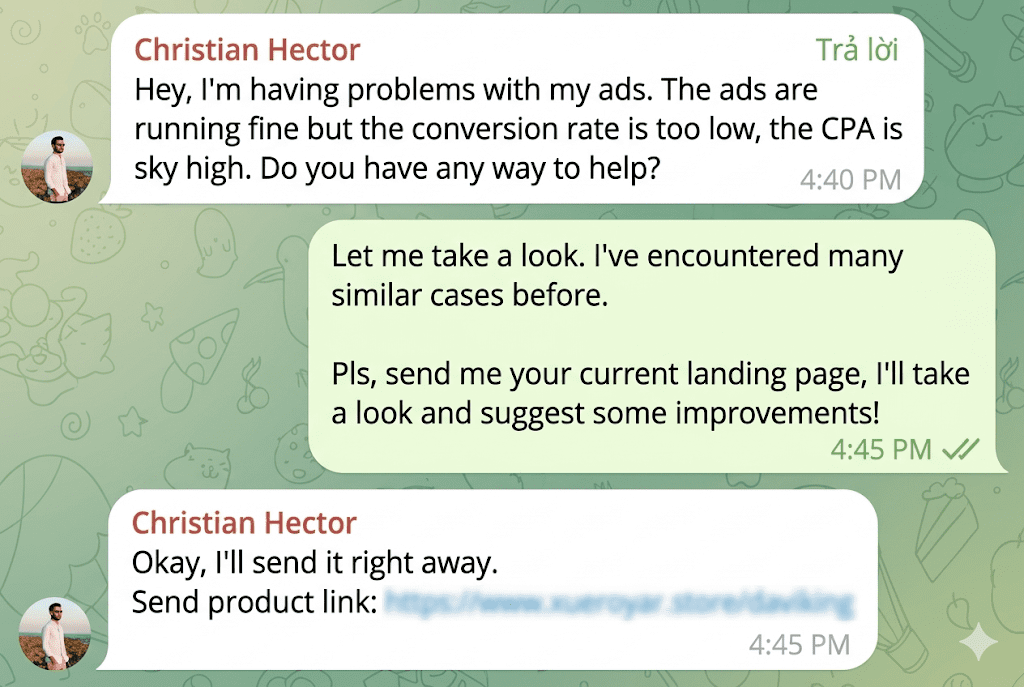
The client operates an online store specializing in household goods and camping equipment, including tents, outdoor tools, and travel accessories. While Facebook Ads campaigns were effective in driving traffic, the business struggled to convert that traffic into actual sales.
Customer background:
- Store owner: Christian Hector
- Business model: Online retail (household & camping products)
- Main products: Tents, outdoor tools, travel accessories
- Traffic source: Facebook Ads (high traffic volume)
Key issues identified:
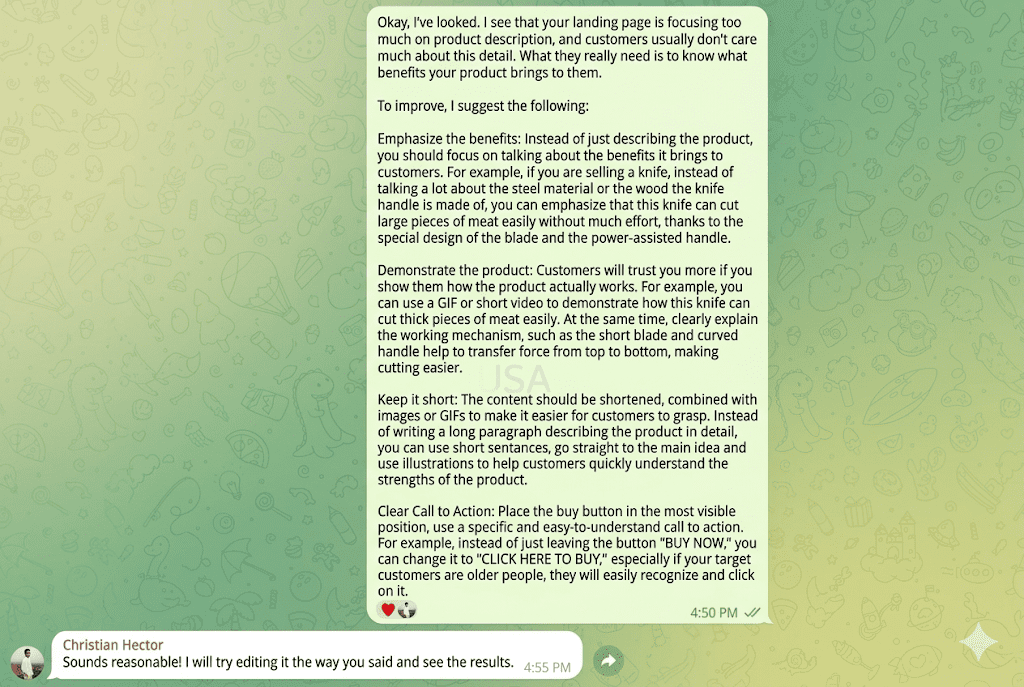
- The landing page focused too much on technical details: Product descriptions were informative but failed to highlight clear customer benefits or answer the question, “Why should I buy this?”
- Lack of structure and direction: The page did not guide users effectively through the buying journey
- Weak visual and messaging elements: No strong value proposition, limited visual cues, and unclear call-to-action (CTA)
- Information overload: Users had to process too much content without clear guidance, leading to confusion and drop-offs.
3. Conversion Optimization Strategy By NEMI ADS
Instead of changing ads or increasing the budget, NEMI ADS focused on optimizing the Facebook ad account strategy to turn existing traffic into revenue. The strategy was implemented through the following key actions:
- Audit landing page experience: Identified friction points that prevented users from completing purchases
- Shift messaging to customer benefits: Replaced technical descriptions with clear value focused on usability, comfort, and real-life application
- Simplify content structure: Converted long text blocks into shorter, scannable sections to improve readability and user flow
- Add visual demonstrations: Show how products are used in real camping scenarios to increase trust and product understanding
- Improve call-to-action placement: Made CTA elements more visible and strategically positioned to guide users toward purchase decisions
- Keep ads and budget unchanged: Ensured that performance improvements came purely from better conversion optimization, not increased spend
This structured approach helped transform existing traffic into higher conversion rates and improved overall campaign efficiency.
4. Results And Business Impact
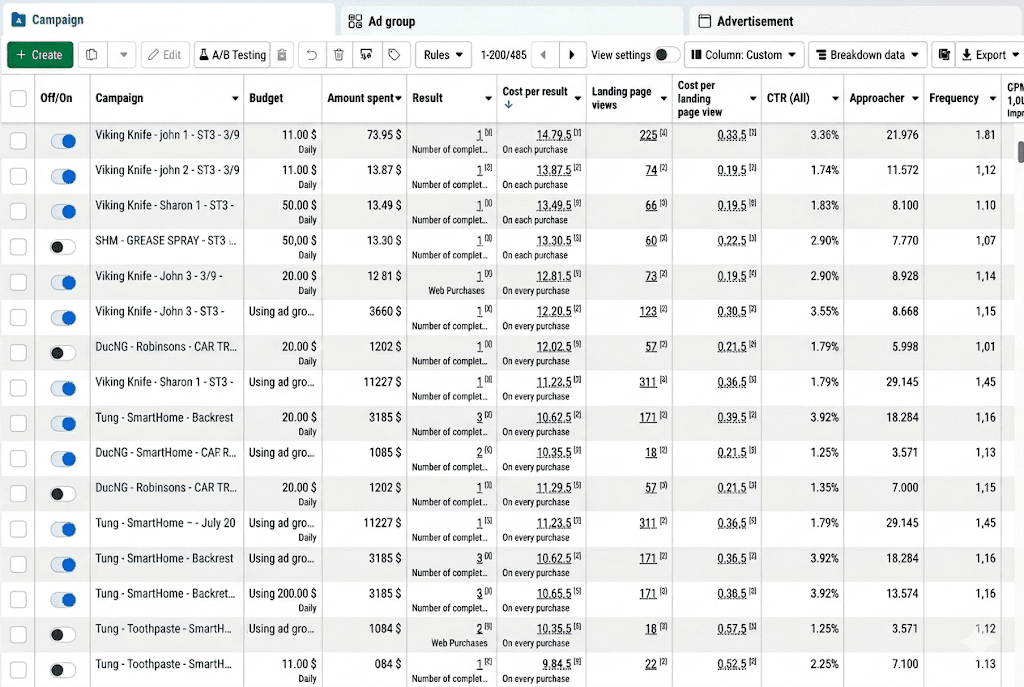
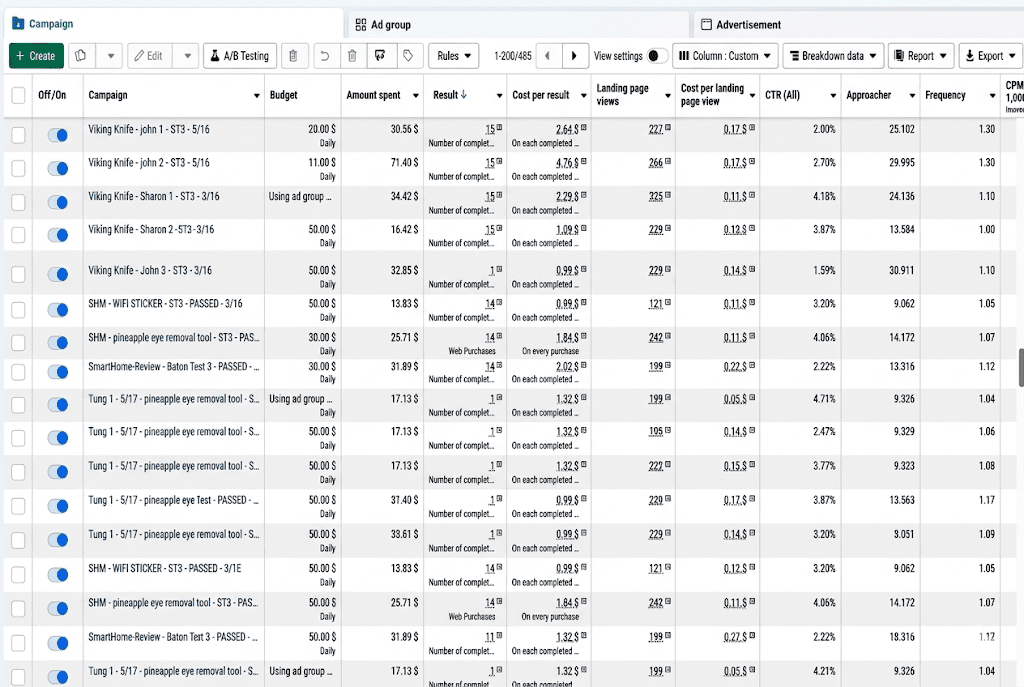
After implementing the conversion-focused strategy, the campaign showed clear improvements in performance without increasing ad spend:
- Cost Per Landing Page View: Reduced to around $0.11 – $0.22, with most campaigns stabilizing at ~$0.14 – $0.18, improving traffic efficiency.
- Cost Per Conversion (Purchase): Decreased from inconsistent high levels to a stable range of $9.84 – $14.79 per purchase, with several campaigns maintaining results around $10-$12, reflecting better conversion performance.
- Click-Through Rate (CTR): Improved to 2.0% – 4.7%, indicating stronger ad relevance and better audience engagement after optimizing messaging and structure.
- Conversion Volume: Multiple campaigns consistently generated 1-3 purchases per ad set, showing more stable and predictable performance compared to previous fluctuations.
- Campaign Efficiency: With daily budgets ranging from $20 – $50, campaigns delivered more conversions without increasing spend, improving overall cost efficiency and scalability.
- Funnel Performance: Landing page optimization significantly reduced drop-off rates, leading to higher purchase intent and better user experience across the funnel.
These results demonstrate that for household goods and camping equipment, improving the conversion layer, messaging clarity, and user journey can deliver a stronger impact than simply increasing traffic or budget.
Facebook Ads can become a strong growth channel for household goods and camping equipment when built on the right system. The key is not just driving traffic, but converting that traffic into real sales through better messaging and user experience. With the right strategy, businesses can achieve both efficiency and long-term scalability, while building a stronger foundation for future expansion through TikTok ad accounts. Contact NEMI ADS today for a free audit and start improving your campaign performance.