
As a marketer, understanding CPA in Facebook ads is essential. This key metric measures true performance and helps you find high-quality leads from every campaign. It focuses on actions that bring real value, not just clicks or views. Whether you’re new to digital marketing or want to improve your ad strategy, this guide will help you grasp what cost per action Facebook ads are, their benefits, and how to use them to boost your advertising results.
1. What is the cost per action (CPA) in Facebook ads
1.1 Definition
Cost per action Facebook ads charge you only when a person completes a specific action after seeing your ad. These actions may include buying a product, filling out a form, or installing an app. This pricing method helps control ad spend by paying only for results that matter to your goals.
For instance, you can monitor how much you spend for a link click or a completed conversion instead of paying for impressions (CPM). Compared with the average cost per click of Facebook ads, CPA gives a more accurate view of how your ads perform in driving valuable actions.
The tracking period for each action depends on your bidding setup. Facebook usually applies a 7-day click or 1-day view attribution window. This ensures your cost per action on Facebook is measured correctly based on verified user behavior within that timeframe.
1.2 Formula
In practice, the Cost Per Action (CPA) model on Facebook Ads is widely used in both marketing platforms and business advertising. However, the calculation method can vary depending on campaign goals and optimization settings.
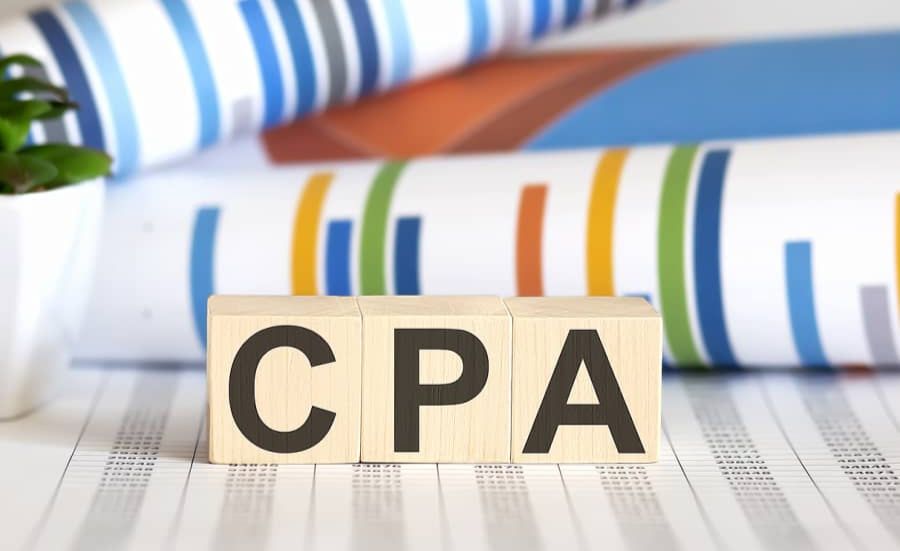
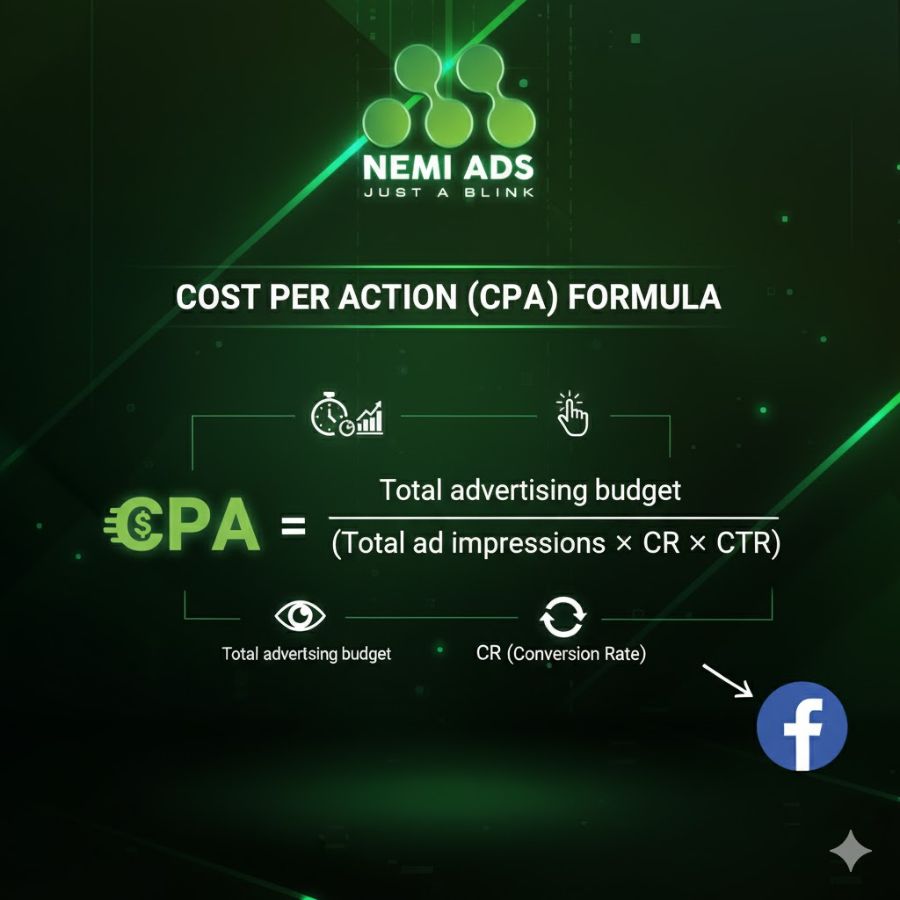
In business advertising, CPA on Facebook is calculated using the following formula:
CPA = Total Facebook advertising cost / Total number of conversions
This metric helps advertisers measure how much they spend on average for each desired action, such as a purchase, registration, or form submission. By tracking CPA, businesses can assess campaign efficiency and adjust targeting, creatives, or budgets to improve performance.
Example: Suppose your ad budget is $400, your campaign receives 40,000 impressions and 2,000 clicks, and 100 of those clicks lead to purchases. Using the formula above:
- CTR = (2,000 / 40,000) × 100% = 5%
- CR = (100 / 2,000) × 100% = 5%
- CPA = 400 / (40,000 × 5% × 5%) = $4
In other words, you spend $4 for each successful conversion. This means cost per action Facebook ads directly connect your ad budget to measurable business outcomes.
2. Forms of CPA in Marketing
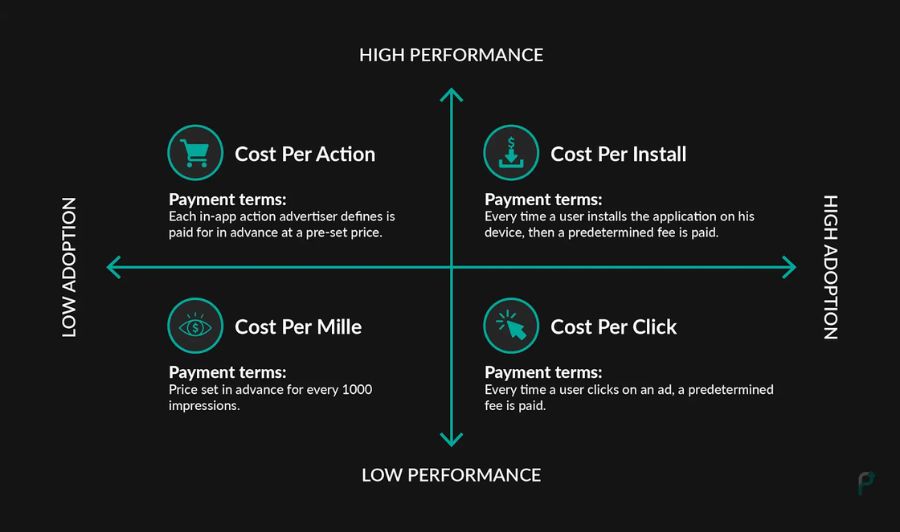
In CPA-based Facebook ads, three pricing models guide your budgeting: CPL, CPS, and CPI. Choose the one that matches your sales funnel to keep campaigns effective and spending optimized.
2.1 CPL (Cost Per Lead)
You pay when a prospect provides contact details such as a name, phone, or email. CPL suits products or services that need more time and nurturing before purchase. It measures intent rather than clicks, making it different from average CPC on Facebook ads. Within this model, CPL helps evaluate Facebook Ads lead quality, form completion, and follow-up potential.
2.2 CPS (Cost Per Sale)
You pay only after a confirmed transaction. This connects ad spend directly to revenue and works best for retail or direct-to-consumer brands. In this approach, CPS helps analyze return on ad spend and basket value. Comparing the average cost per action Facebook across campaigns allows you to identify which channels bring the best results.
2.3 CPI (Cost Per Install)
You pay when someone installs your app. This fits software and tech businesses focused on user growth. CPI shows how creative elements and targeting influence app installs and store engagement. Choose it when app adoption – not clicks or orders – is your key performance goal.
Each CPA model supports a specific business objective. CPS (Cost Per Sale) is common in retail because it links costs directly to income. For high-value products or services that require consultation or trials, CPL (Cost Per Lead) performs better by attracting qualified prospects who show real interest. Selecting the right model keeps ad spending efficient and performance aligned with your sales strategy.
3. Why cost per action Facebook ads matter for advertisers
Cost per action Facebook ads help businesses spend smarter and reach better results. This model focuses on actions that truly matter, such as purchases or sign-ups, instead of random clicks or views.
3.1 Effective Cost Control
With this model, you only pay when a real action happens – like a sale, registration, or app install. It helps reduce wasted spending and keeps your budget focused on outcomes that bring value. Compared to the average cost per click of Facebook ads, CPA makes it easier to manage costs and improve ad performance. It ensures every dollar supports actions that drive growth.
3.2 Increase Conversion Rates
This approach improves conversions by targeting users who are ready to act. It allows advertisers to refine their audience and focus on quality engagement, not just traffic. Unlike cost per click for Facebook ads, which measures visits, CPA tracks meaningful actions that boost conversion rates. The result is stronger performance and better returns from every campaign.
3.3 Reduced Spending Risk
With CPA, you pay only when results are achieved. This lowers the risk of wasting money on clicks or impressions that don’t convert. By linking payment to success, Facebook cost per action gives advertisers more control and confidence in their spending. It ensures each campaign delivers measurable, valuable outcomes.
4. Effective CPA Reduction Tips
Strong control and clear targeting help reduce advertising costs while keeping performance steady. Use the tips below to cut waste and improve results.
4.1 Use Smart Bidding
Apply automated bidding that aligns with your conversion goals. Set limits to avoid overspending and provide accurate data for the system to learn. Once performance improves, increase budgets gradually to maintain stable results. Compare outcomes with the average cost per click of Facebook ads to measure real efficiency. To inform your strategy before bidding, research competitor creatives using ad library in Facebook.
4.2 Audience Optimization
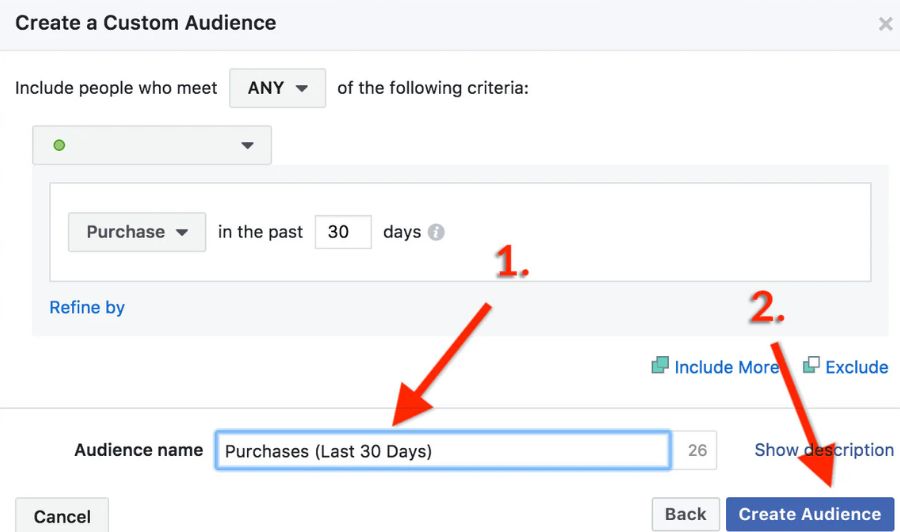
Create Custom Audiences from visitors, engaged users, and previous customers. Use Lookalike Audiences with precise source data to expand reach effectively. Exclude recent buyers to avoid overlap and refresh audience lists often. This keeps ad frequency balanced and helps maintain a lower cost per action Facebook ads.
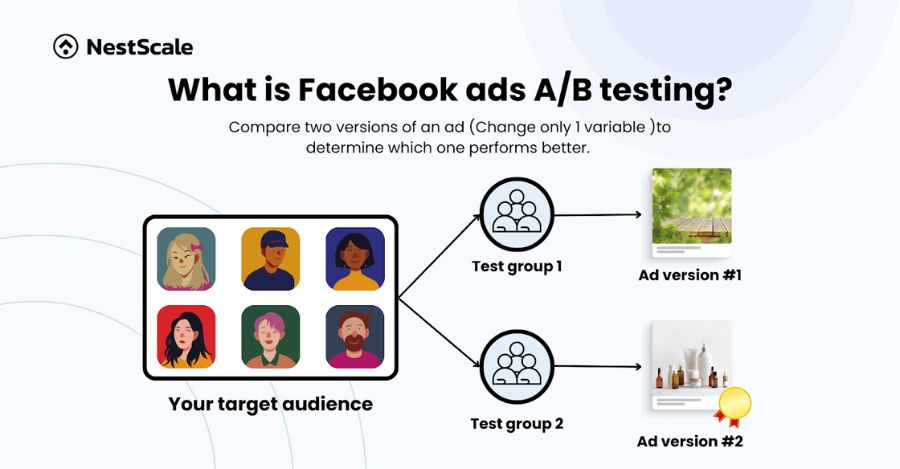
4.3 A/B Testing
Test one element at a time – creative, headline, or landing page. Keep budgets equal and test periods consistent. Choose winning ads based on conversion rate and consistency, not just clicks. This approach moves focus away from metrics like Facebook cost per click and supports better campaign performance.
Alternatively, implement dynamic Facebook Ads to automatically test multiple creative combinations and find the best performers faster.
4.4 Tracking and improving Quality Score
Facebook no longer uses Quality Score. It now measures ad performance with Ad Relevance Diagnostics.
This system includes three simple rankings:
- Quality ranking: how your ad’s quality compares to others.
- Engagement rate ranking: how likely people are to interact with your ad. To boost this ranking, look at successful engagement ads on Facebook examples to understand what content resonates with users.
- Conversion rate ranking: how your ad’s results compare to similar ones.
To improve these scores, keep your ad and landing page consistent. Make pages load fast and easy to use. Use clear calls to action and group ad sets by theme. Better relevance helps lower your ad costs and improve performance over time.
5. FAQs – cost per action Facebook ads
5.1 What is a “good” CPA for Facebook ads?
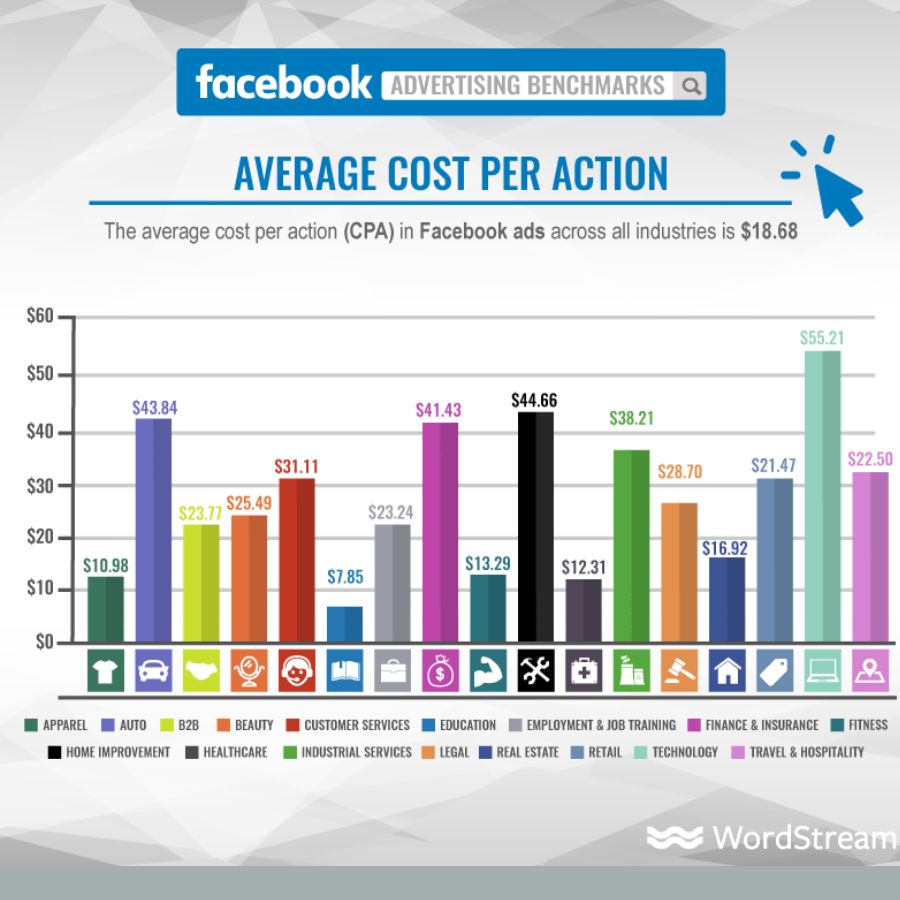
A useful benchmark for cost per action (CPA) on Facebook ads is around US $18.68 on average across all industries (source: EQVN). However, there is a large variation by sector. For example, in e-commerce apparel, the average CPA is roughly US $10.98, while in technology, it can exceed US $55 (source: Mona Media). Use these figures as reference points only – your ideal target should align with your product margin, offer, and actual conversion value.
5.2 Can I optimize for multiple actions (leads vs purchases) in one campaign?
It’s possible, but not ideal. Mixing different actions in one campaign can confuse the learning system. To get stable results and lower your cost per action Facebook ads, focus each campaign on one main conversion goal. This helps Facebook’s algorithm learn faster and deliver better performance.
5.3 What factors affect CPA on Facebook ads?
Many things can change your CPA on Facebook. The main ones are your audience, ad quality, bid type, and landing page. A clear audience and a good ad message often lower costs. If your ad or page loads slowly or looks unclear, your CPA can rise. Make sure your page is fast, simple, and has a clear call to action to get better results
We hope this guide from NEMI Ads has helped you better understand how CPA works, how to calculate it, and how to apply it to reach more potential customers. By focusing on meaningful user actions, you can improve your ad performance and achieve real, measurable growth. Wishing you success as you put cost per action Facebook ads strategies into practice and turn every campaign into lasting results.Ready to scale your business? Contact NEMI Ads now to secure a stable Facebook ads account for rent and maximize your campaign performance.